
Cover version
A tip of the newsboy cap to the COME AGAIN NO MORE cover that wasn’t

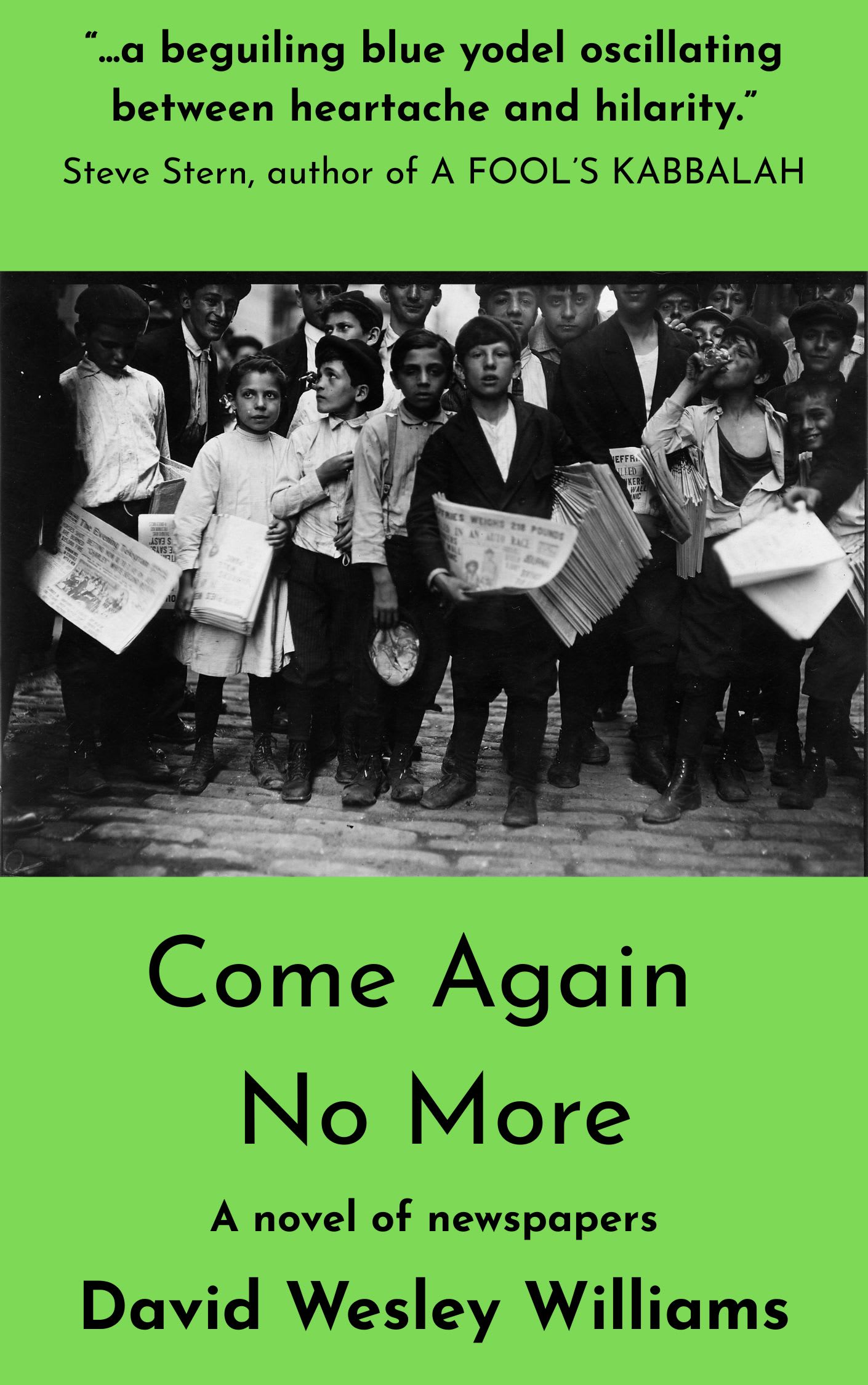
About a year before COME AGAIN NO MORE, my 2025 newspaper novel, was to be published by JackLeg Press, I emailed the publisher with an idea:
My wife and I came up with a quick cover concept. See what you think.
It’s a start, at least. I like that it’s colorful, and a bit in-your-face. It’s not soft.
The mock-up above is more or less what I sent. I’ve changed the font, and swapped in a real blurb for my original made-up one, but otherwise it’s the same. The photo is public domain, via the Library of Congress. It’s titled “Newsboys and Newsgirl,” and was shot on Park Row, New York City, in July 1910 by Lewis Wickes Hine, who was a trained sociologist and specialized in chronicling child labor. He was quite the muckraker, apparently, as you can see from this Smithsonian Magazine story, “The Photographer Who Forced the U.S. to Confront Its Child Labor Problem.”
My novel was set a century later, but I loved the idea of the newsboys and newsgirl being the faces of it. Newspapers are a gritty business, after all. Not for nothing we were called ink-stained wretches. And newspapers, for all their noble intent and high ideals, could also be as deeply flawed as any public institution. The novel plays with that idea, and so, too, could the cover.
Also, one of the fallen journalists was a copy editor named Tommy Miles, who always wore a tweed newsboy cap.
Alas, as they say. Alas. The publisher didn’t like my cover “concept.” I don’t think she said why, and I didn’t push it. The book is the author’s, but the cover is the publisher’s. That’s the rule and I abide by it. The author generally gets to weigh in, offer suggestions, but publishers decide — and ought to. They have a better sense of what sells. And they’re publishing the thing, after all. It’s going out in the world under their imprint.
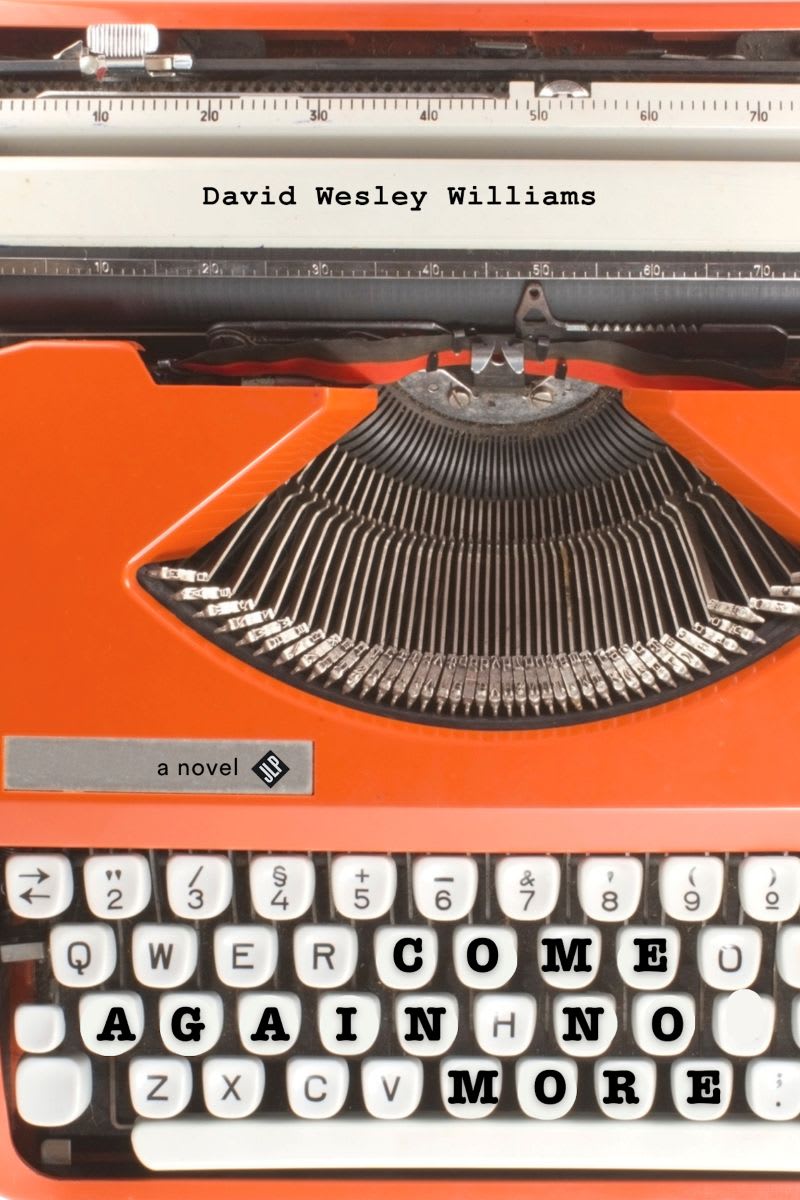
So, we ended up with the cover you may have seen, the cover below. It’s cool. I’m happy with it. I love old typewriters, which were still newsroom fixtures when I started in the business.
But what do you think? Newsboys (and girl) or typewriters? Or do you even judge a book by, you know …
Bonus material: Charley Hull’s favorite cover song
Charley Hull, erstwhile reporter at a fictional Memphis daily, is the voice of COME AGAIN NO MORE. He loves music (also his old newspaper life; his few dear friends; whiskey; and feeling sorry for himself — that’s pretty much the full list). The book’s title comes from a line in “Hard Times,” the old Stephen Foster song first published in 1854 and covered ever since, by everyone from Bob Dylan to Black 47 to Mary J. Blige.
“Hard Times” is Charley’s personal anthem.
He loves all versions of it, but his favorite is by a young singer in the book. He was half of a duo, but his girlfriend ran off shortly after they arrived in Memphis. When Charley and the young singer first meet, at the novel-opening barroom wake for the laidoff journalists, Charley consoles him, saying his heartbreak will be a fount of great songs. (Charley should know. He got a whole novel out of his.)
They meet again later, in a scene where Charley dreams he’s died. It’s a lonely death, out on his front porch. Some crows show up to pick poor Charley clean. But then his old newspaper friends arrive. They know just what to do —
Flippen said he could write the obit.
Stell said she’d slap on a headline.
Pearl was already snapping pictures.
The journalistic necessities in hand, Barboro said he’d get the drinks.
And then they made a sort of party of it.
Later, when the festivities are winding down, when the tone turns serious and heartfelt things are being said, the young singer shows up …
He stood just below the porch with his guitar, in the moonlight, and serenaded us all. He sang a spiritual and then he sang a lovely, little song we took to be one of his own. He had a clear, bright voice like a bell that rang out with those words of his, backing by the delicate chiming of his guitar. He finished the song and then said, “I only met Charley the once, so I don’t claim to know his favorite song. But the night we met, he asked if I knew this one. So here goes ...”
Then he sang that dear favorite of mine, that old one by Stephen Foster.
“Hard times,” the boy sang, “come again no more.”
It sounded like a prayer, a plea, a requiem for the wreck of me. They all teared up at that — even the birds. Then they all let me be, dead me, walking slumping down the walk, leaning on one another for support, as much from the emotion as from my booze. Or they flapped away on broad, black wings, those that had them.
The ghost of me got up and turned in for the night. It slept deeply and liked to never wake up again.
Oh, I almost forgot. They meet one last time, during the novel’s version of a happy ending. Charley has found love and purpose. He’s upright and functioning again. Also, the young singer’s girlfriend has returned. They’re back together and sounding better than ever …
They were raising a fine and proper ruckus. It was the Church Keys — our young friend’s gal had come back, against considerable odds, after a year or more in New Orleans. The music, culture, and lore of the Crescent City had as much influence on her as the Bluff City’s had on him, in their time apart. When they got the band back together, they added a rhythm section and horns, fashioned a new sound from found parts. There were elements of ragtime and jump blues, the funky penguin and the ooh, poo, pah doo. They still played some of the old songs, but done in all manner of different styles. Their songs had steam and tail feathers, they had froth and kick. They even played a couple of different versions of “Hard Times.” In my favorite of the two, it sounded like Hard Times had won the lottery, or at least found purpose and steady work …
For more on COME AGAIN NO MORE:
A disturbance in the Southern fiction aisle (Where else?)
One month to COME AGAIN NO MORE
Charley Hull sure is an opinionated cuss
Cold beer here: Or, how to pitch literary fiction in a world where the average book sells 100 copies
‘A beguiling blue yodel of a book’
The Talking Come Again No More Blues
Interview on the Book Talk podcast of WYPL, the Memphis library system radio station.
The latest review
Small Press Picks says ‘it’s like being seated next to the best storyteller at the local pub.’
Oh, love the typewriter